Ottawa Pho for First-Timers: What to Order, What to Expect & Where to Go
Trying pho for the first time in Ottawa? You've made a great decision. Here's everything a first-timer needs to know — from what to order to how to eat it, and which Ottawa pho restaurants are best for beginners.
Category: guide
📋 Table of Contents
- Your First Ottawa Pho Experience
- Step 1: Choose the Right Restaurant
- Step 2: Understanding the Pho Menu
- Step 3: What to Order Your First Time
- Step 4: When the Bowl Arrives
- Step 5: Using the Garnish Plate
- Step 6: Sauces and Condiments
- Step 7: How to Actually Eat Pho
- Pho Etiquette: Dos and Don'ts
- Planning Your Second Visit
- What Does Pho Cost in Ottawa?
Your First Ottawa Pho Experience: A Complete Beginner's Guide
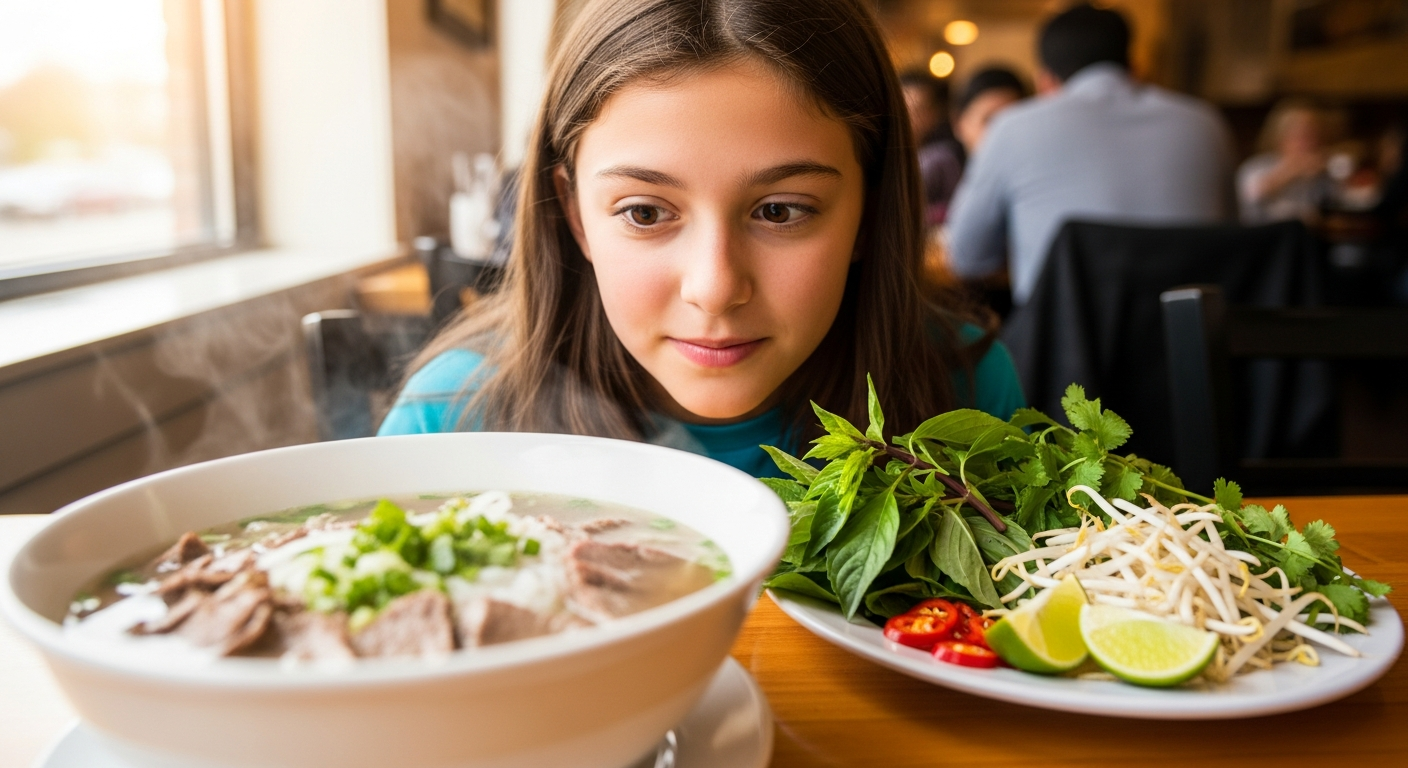
Trying pho for the first time in Ottawa is one of the city's most rewarding culinary experiences. Whether you've been intimidated by the menu, unsure what the herbs are for, or simply haven't gotten around to it yet — this guide will take you from complete beginner to confident pho diner in a single read.
Pho (pronounced "fuh" — learn more in our pronunciation guide) is Vietnam's iconic noodle soup: flat rice noodles in a deeply aromatic bone broth, topped with protein, served with a plate of fresh herbs for you to customize. It's one of the most satisfying, nourishing, and affordable meals in Ottawa — and once you've had your first bowl, you'll understand why people eat it multiple times a week.
First-Timer Quick Facts
~20 min
Typical meal duration
$13-18
Regular bowl price
350-500
Calories per regular bowl
"Fuh"
Correct pronunciation
Step 1: Choose the Right Restaurant for Your First Bowl
For your first bowl of ottawa pho, the restaurant you choose matters more than it will on any subsequent visit. You want a place with exceptional broth — because pho's soul is in the broth — but also a welcoming atmosphere, clear menus, and consistency. You want to be impressed, not just adequately fed.
Our Top Recommendation for First-Timers
Pho By Night — 309 Dalhousie St, ByWard Market
Ottawa's #1 rated pho restaurant with 4.8 stars from 3,600+ reviews. 24-hour bone broth, halal certified, MSG-free. The perfect first bowl because it shows you exactly what pho is capable of at its best.
Other great first-timer choices in Ottawa:
- Pho Bo Ga La (Chinatown) — Classic institution, authentic atmosphere, great spring rolls
- Pho Tuan (Chinatown) — Exceptional broth clarity, quieter and more relaxed
- Authentic Vietnamese Pho House (Kanata) — Best west-end option for first-timers
Step 2: Understanding the Pho Menu
Vietnamese pho menus follow a consistent structure once you know how to read them. Here's how to decode what you're looking at:
| Menu Term | Pronunciation | What It Means |
|---|---|---|
| Pho Bo | Fuh Baw | Beef pho (most common) |
| Pho Ga | Fuh Ga | Chicken pho (lighter broth) |
| Pho Chay | Fuh Chay | Vegan/vegetarian pho |
| Pho Tai | Fuh Tie | Rare beef sirloin |
| Pho Chin | Fuh Chin | Braised brisket |
| Pho Gan | Fuh Gahn | Beef tendon |
| Pho Bo Vien | Fuh Baw Vee-en | Beef balls |
| Pho Dac Biet | Fuh Dak Bee-et | House special (all proteins) |
Step 3: What to Order Your First Time
Pho Tai
Rare beef sirloin. The most popular choice — delicate, beefy, and the best introduction to pho. The raw beef cooks perfectly in the hot broth.
Regular: ~$13 | Large: ~$16
Pho Dac Biet
The house special with all proteins — rare beef, brisket, tendon, and beef balls. More complex, great if you want to try everything at once.
Regular: ~$15 | Large: ~$18
Pho Ga
Chicken pho. Lighter and more delicate broth. A great choice if you prefer poultry or want something less intense for your first bowl.
Regular: ~$13 | Large: ~$16
What size should I order? Start with a regular. Large bowls at Ottawa pho restaurants are genuinely large — more than most first-timers can finish. You can always order large next time once you know what you're in for.
Step 4: When the Bowl Arrives — Don't Start Eating Yet
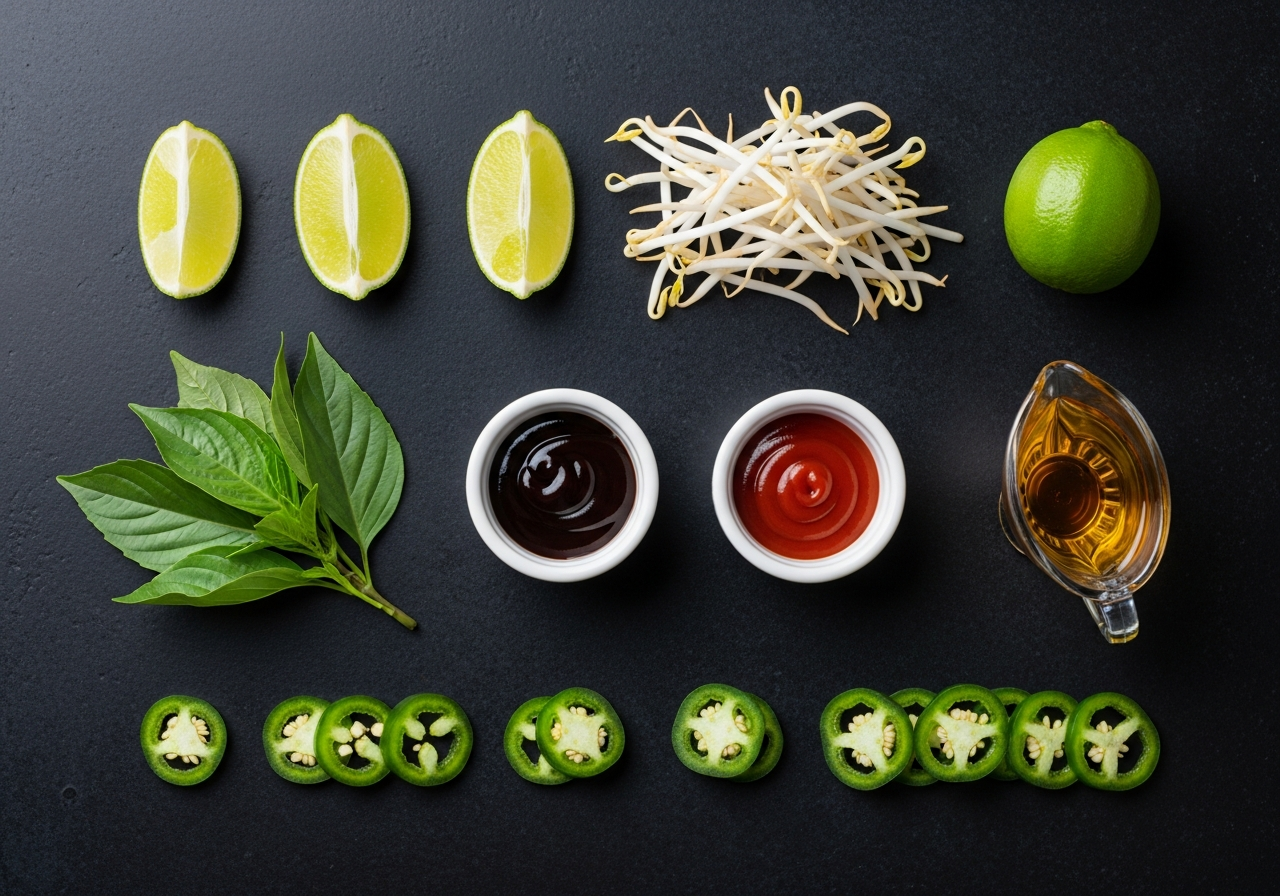
When your pho arrives, you'll get two things: the bowl itself, and a separate plate with fresh garnishes. The garnish plate is not decoration — it's half the experience. Here's what's on it and what to do:
Step 5: Using the Garnish Plate
Bean Sprouts (Giá)
Drop a handful directly into the hot broth. They add crunch and a fresh, clean flavour that cuts through the richness. Don't add all of them at once — add in batches as you eat so they stay crisp.
Thai Basil (Húng Quế)
Tear the leaves from the stems and drop them into the broth. Do this just before eating — the heat releases the aromatic oils and the basil perfumes the bowl beautifully. Don't add the stems.
Lime Wedge (Chanh)
Squeeze one lime wedge into the broth and stir. The acidity brightens everything — it cuts through the fat, elevates the aromatics, and makes the broth taste more complex. This is non-negotiable.
Fresh Chili or Jalapeño (Ớt)
Add one or two thin slices if you like heat. Fresh chili is hotter than it looks — go slow. You can always add more but you can't take it out. Leave them out entirely on your first bowl if you're unsure.
Want to learn more? Read our complete Pho Toppings Guide.
Step 6: Using the Table Sauces
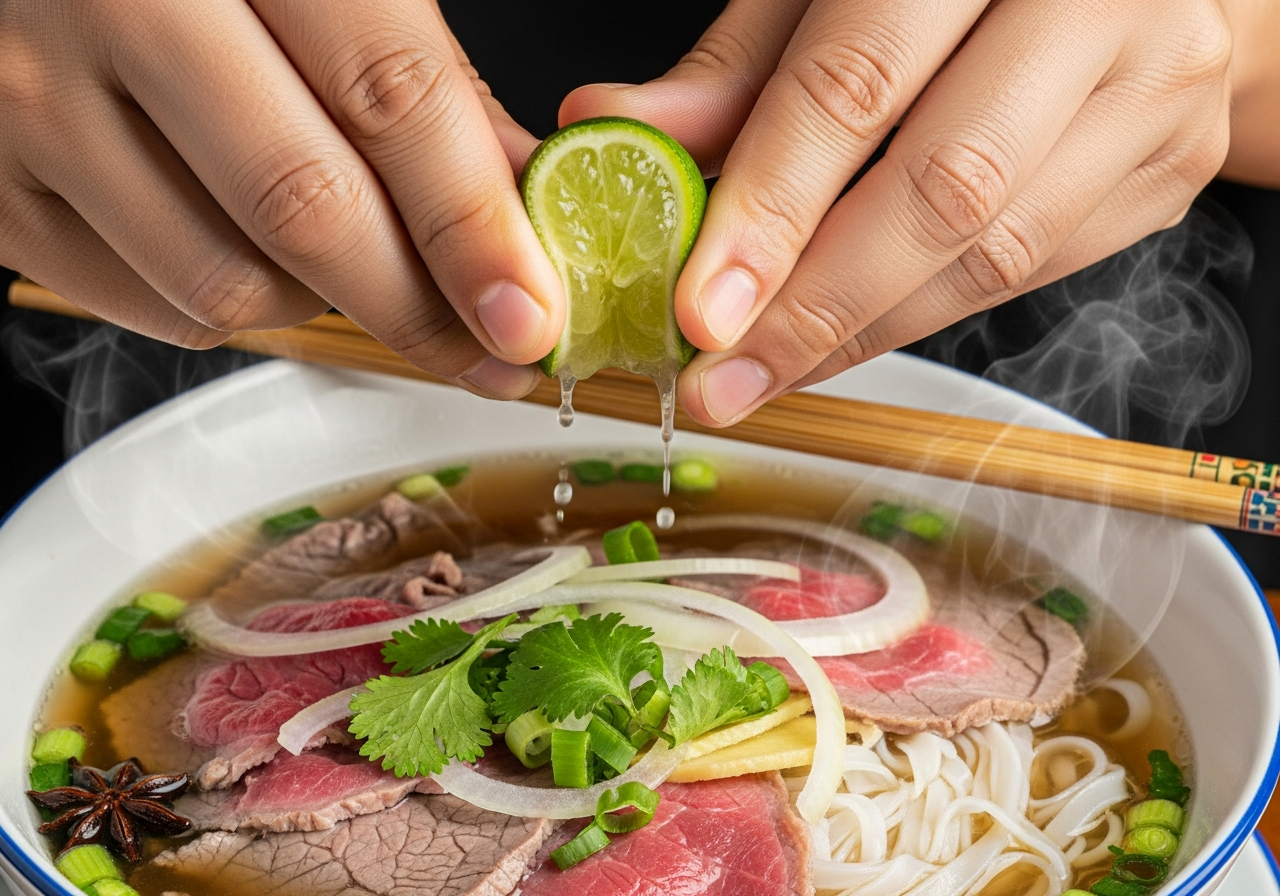
On your table you'll find two bottles that confuse almost every first-timer: hoisin sauce and sriracha. Here's exactly how to use them — and the most common mistakes to avoid.
| Sauce | What It Is | How to Use It | Common Mistake |
|---|---|---|---|
| Hoisin Sauce | Sweet, thick bean sauce | Put a small amount on the edge of your bowl or a side plate. Dip your beef into it. Do NOT pour into the broth. | Pouring the whole bottle into the broth — ruins the delicate flavour |
| Sriracha | Hot chili sauce | Add directly to the broth in small amounts for heat. Goes better into the broth than hoisin does. | Adding too much — overwhelms everything else |
| Fish Sauce | Fermented fish-based sauce | Add a small drop to increase umami/saltiness. Use sparingly — it's very strong. | Adding too much — makes the broth very salty |
Read our complete guide: Pho Sauce Guide: Every Condiment Explained
Step 7: How to Actually Eat Pho
Use chopsticks in one hand and the deep soup spoon in the other. This is the standard pho eating technique and it gets comfortable very quickly even for first-time chopstick users. Here's the rhythm:
-
1
Add your garnishes and squeeze the lime first.
Set up your bowl before you start eating. Once you add basil and lime, give the bowl a gentle stir to distribute everything.
-
2
Sip the broth first, before anything else.
Use the spoon to taste the broth by itself. This is the centerpiece of the dish — appreciate it on its own before adding the other elements.
-
3
Use chopsticks for noodles and meat, spoon for broth.
Lift noodles and meat with chopsticks, hold the spoon underneath to catch broth drops, and eat them together. Alternate between eating and sipping the broth directly from the spoon.
-
4
Slurping is completely acceptable — and encouraged.
Slurping cools the noodles before they reach your mouth (pho is served very hot) and, in Vietnamese culture, is a sign of genuine enjoyment. Do not try to eat pho silently. It doesn't work and you'll burn your mouth.
-
5
Drink the remaining broth at the end.
When the noodles and proteins are gone, lift the bowl and drink the remaining broth. It's been cooking for 24 hours. It deserves to be finished.
Pho Etiquette: Dos and Don'ts
✓ Do These
- ✓ Slurp your noodles — it's respectful
- ✓ Tear Thai basil leaves into the broth
- ✓ Squeeze lime into the bowl directly
- ✓ Drink the broth at the end
- ✓ Ask about the broth — chefs are proud of it
- ✓ Order a side of spring rolls on your first visit
✗ Avoid These
- ✗ Pouring all the hoisin into the broth
- ✗ Adding garnishes and then waiting — eat while hot
- ✗ Asking for ketchup (seriously, this happens)
- ✗ Cutting the noodles with a knife — use chopsticks
- ✗ Over-salting — the broth is already seasoned
- ✗ Leaving significant broth behind — it's disrespectful to the cook
Planning Your Second Visit
After your first bowl, you'll have a reference point. Here's how to deepen your pho education on subsequent visits:
Second visit: Try the Pho Dac Biet (house special) instead of just Pho Tai. Experience multiple proteins — rare beef, brisket, tendon, and beef balls — in a single bowl. Each one interacts with the broth differently.
Third visit: Visit a different restaurant and compare. Try Pho Tuan in Chinatown for a contrast in broth style — much more delicate and clear than Pho By Night's richer expression.
Ongoing: Explore the different broth types, try chicken pho (Pho Ga), explore Bun Bo Hue (spicy Hue-style broth), and work your way through Ottawa's full restaurant directory.
What Does Ottawa Pho Actually Cost?
| Bowl Type | Small | Regular | Large |
|---|---|---|---|
| Basic (Pho Tai) | $11-13 | $13-15 | $15-18 |
| House Special (Dac Biet) | $13-15 | $15-17 | $17-20 |
| Chicken Pho (Ga) | $11-13 | $13-15 | $15-17 |
| Vegan Pho (Chay) | $10-12 | $12-14 | $14-16 |
Pho is one of Ottawa's great value meals. A complete, nourishing bowl that satisfies completely, all for $13-18. For the quality and the experience — especially at a restaurant like Pho By Night where the broth has been cooking for 24 hours — it represents extraordinary value.
Ready for Your First Ottawa Pho Bowl?
Start at Pho By Night (309 Dalhousie St, ByWard Market). Ottawa's highest-rated pho restaurant and the perfect first bowl for any newcomer.
Find Ottawa Pho Near You Read More Pho GuidesMore Blog Posts | Browse Restaurants | Back to OttawaPho.com