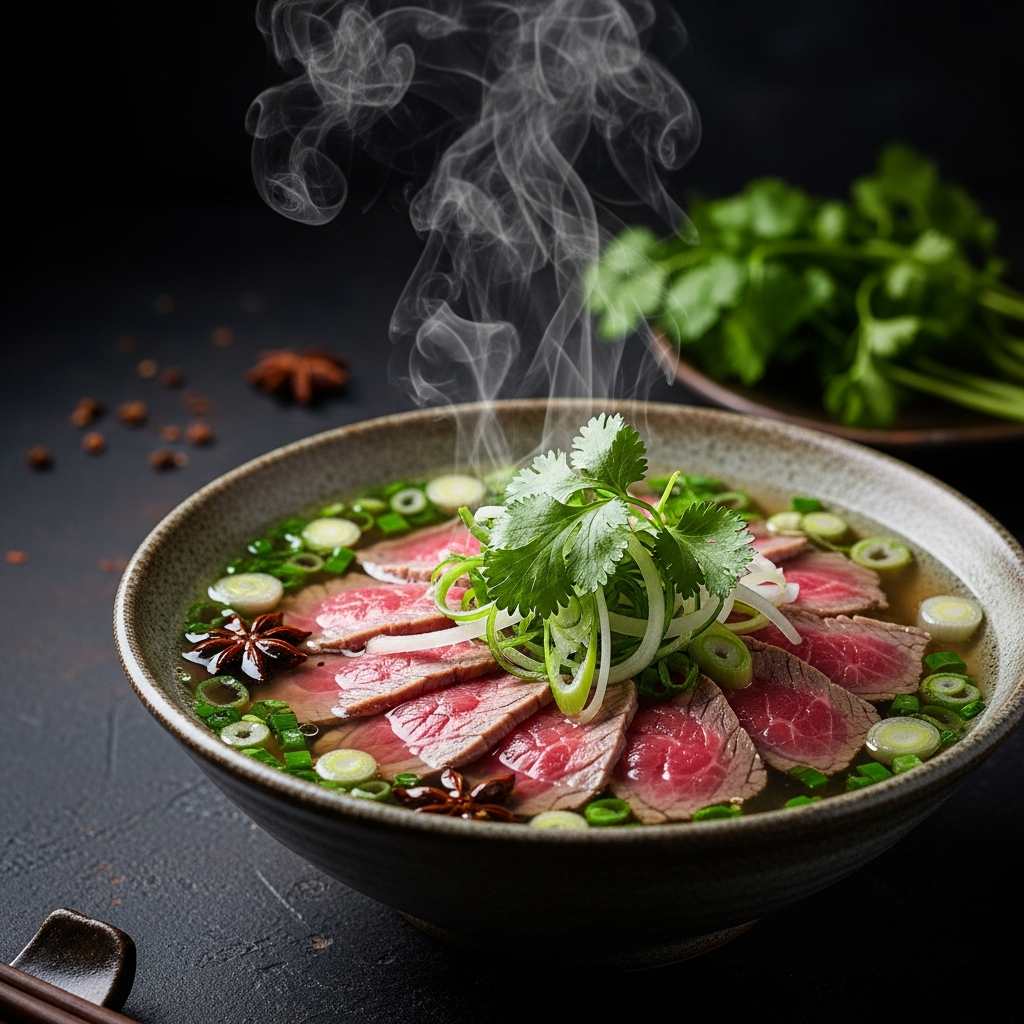
What Are Pho Noodles?
Pho noodles — known in Vietnamese as bánh phở — are flat, wide rice noodles made from a simple combination of rice flour and water. They're the noodle component of Vietnam's national dish, and their unique texture is as important to the bowl as the broth itself.
Unlike pasta or ramen noodles (which use wheat flour), pho noodles have no gluten. The rice flour gives them a distinctive silky, slightly slippery quality — they're soft without being mushy, and they have a neutral flavour that allows the aromatic bone broth to come through completely. Bite one before adding broth and it tastes like almost nothing. In broth, it becomes the vehicle for every flavour in the bowl.
At Pho By Night in Ottawa's ByWard Market, fresh pho noodles are used — not the dried packaged variety. Fresh noodles have a superior texture and require only a brief blanch before serving, rather than the extended soaking required by dried alternatives.
The Composition of Pho Noodles
Traditional bánh phở contains exactly two ingredients: rice flour and water. No salt, no oil, no additives. The rice flour is typically milled fine from long-grain rice, which gives the noodles their neutral flavour and white colour.
Some manufacturers add a small amount of tapioca starch to improve the texture and add translucency. This is normal and doesn't affect the gluten-free status. The result is a noodle that's slightly more silky and glossy than pure rice flour alone.
Pho Noodle Widths Explained
Pho noodles come in three standard widths. The choice of width is partly traditional, partly personal preference, and varies by restaurant. Understanding the differences helps you order exactly what you want:
S — Narrow
Very delicate, dissolves quickly in hot broth. Best for light broths and chicken pho. Absorbs broth rapidly.
Best for: Chicken pho, clear broths
M — Medium
The standard. Firm enough to hold its shape through the meal while remaining soft and slippery. The default at most Ottawa restaurants.
Best for: Beef pho, all-purpose
L — Wide
Substantial, slightly chewy, and holds heat well. Preferred by those who want more noodle in every bite. Less common in Ottawa.
Best for: Rich beef broths, tendon pho
How Pho Noodles Are Cooked
The preparation of pho noodles is a skill that separates a good pho from a great one. Overcooked noodles turn to mush; undercooked noodles are gummy. The professional technique is precise:
Dried or fresh?
Pho noodles come in two forms: dried (shelf-stable, need soaking) and fresh (pre-hydrated, ready to cook). Most restaurant-quality pho uses fresh rice noodles. Dried noodles from a package require 20–30 minutes of soaking in cold water before they're ready to cook.
Blanching — never boiling
Fresh pho noodles are NOT boiled in the broth. They are blanched separately — placed in a strainer basket and briefly submerged in boiling water for 20–30 seconds. This cooks the noodles without making them mushy and keeps the broth clear.
Placed in the bowl
The blanched noodles are immediately placed in the serving bowl while hot. If they're left to sit, they'll stick together. A quick shake of the strainer to remove excess water, then directly into the bowl.
Topped, then broth added
The proteins are arranged on top of the noodles — rare beef (tái) placed on top of the hot pile so the broth will cook it when poured. Then the broth is ladled over everything from above, finishing the bowl.
Served immediately
Pho must be served and eaten immediately. The noodles continue absorbing the broth and soften over time. Waiting too long means the noodles become overly soft and the rare beef overcooks. This is why takeout pho separates noodles from broth.
Pho Noodles vs Bún Noodles
This is the most common confusion in Vietnamese cuisine. Both bánh phở and bún are rice noodles, but they're completely different in shape, texture, and application. Here's how they compare:
| Factor | Pho (Bánh Phở) | Bún (Vermicelli) |
|---|---|---|
| Shape | Flat (like linguine, but wider) | Round (like thin spaghetti) |
| Texture | Slippery, silky, delicate | Firmer, springier, more toothsome |
| Serving Temperature | Always hot (in broth) | Usually room temp or cold |
| Dish Context | Always in soup/broth | Soup, room temp bowls, spring rolls |
| Best With | Bone broth, clear broths | Grilled meats, dipping sauces, peanut sauce |
| Width | 2–12mm depending on type | ~1.5–2mm (very thin) |
Pho Noodles vs Ramen, Udon & Soba
Pho noodles are frequently compared to noodles from other Asian cuisines. The most important distinctions:
| Noodle | Base | Gluten-Free | Texture | Cal/serving |
|---|---|---|---|---|
| Pho Noodles (Bánh Phở) | Rice flour + water | Flat, silky, delicate | ~190 per serving | |
| Bún (Round Rice Vermicelli) | Rice flour + water | Round, firm, springy | ~180 per serving | |
| Ramen Noodles | Wheat flour + alkaline water | Round, chewy, bouncy | ~220 per serving | |
| Udon Noodles | Wheat flour + water + salt | Very thick, pillowy, chewy | ~240 per serving | |
| Soba Noodles | Buckwheat flour (+ wheat) | Thin, firm, earthy flavour | ~170 per serving |
Pho noodles are the only naturally gluten-free noodle in this comparison.
Pho Noodle Nutrition Facts
Pho noodles are nutritionally straightforward — they're primarily a complex carbohydrate source. Here's what you're getting per typical serving (200g cooked):
Calories
Per large serving
Carbohydrates
Complex, filling carbs
Protein
Minimal — comes from broth and proteins
Fat
Nearly fat-free
Fibre
Very low — pure starch
Gluten
Naturally gluten-free
On their own, pho noodles are low in protein and fibre. This is why the quality of the broth and proteins matters so much — the noodles are a vehicle, not a nutritional powerhouse. When combined with a 24-hour bone broth rich in collagen and minerals, and the protein of beef or chicken, the bowl becomes one of the most balanced restaurant meals available. At Pho By Night, a full Pho Dac Biet delivers 35–40g of protein alongside the noodles.
Pho Noodles: Every Question Answered
Experience Pho Noodles at Their Best
Fresh pho noodles in 24-hour bone broth. Pho By Night at 309 Dalhousie, ByWard Market, Ottawa.