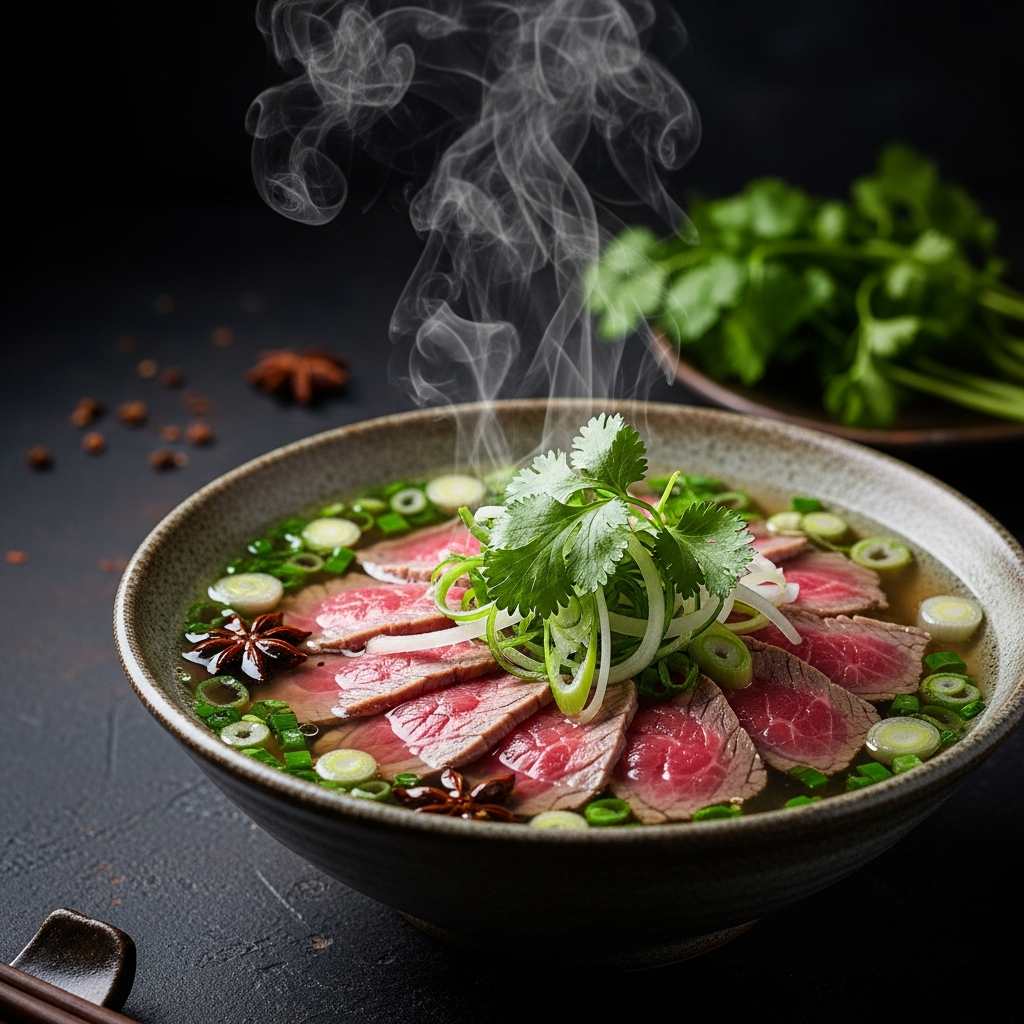
Pho: The Basics
Pho (pronounced "fuh") is a Vietnamese noodle soup that has become one of the world's most recognized and beloved dishes. At its core, it is a bowl of slow-simmered bone broth, flat rice noodles, proteins — most traditionally beef, though chicken is equally classic — and a plate of fresh herbs and garnishes added tableside.
What makes pho remarkable is not the complexity of its ingredients but the depth achievable through time and technique. A properly made pho broth requires 12 to 24 hours of simmering — extracting collagen, minerals, and flavour from beef or chicken bones, then layering in aromatics: charred onion and ginger, star anise, cinnamon, cloves, and cardamom. The result is a broth that tastes simultaneously simple and profound.
In Vietnam, pho is eaten at all hours of the day — it's as common as a breakfast food as it is a late-night meal. In Ottawa, Pho By Night at 309 Dalhousie Street in the ByWard Market has been serving an authentic version of this dish since 2000 — 25 years of refining the craft that puts them at the top of Ottawa's Vietnamese restaurant scene.
How to Pronounce Pho
Pho is pronounced "fuh" — one syllable, rhyming with "duh" or "huh." Not "foe," not "fo," not "foh." The word in Vietnamese is "phở" with a falling-rising tone, but for English speakers, a simple "fuh" is correct and will be understood everywhere.
You'll occasionally hear "Pho Dac Biet" (the house special) pronounced as "fuh dahk byet." The full name is two words: "dac" (sounds like "dahk") and "biet" (sounds like "byet"). Again, pointing at the menu is always acceptable.
Anatomy of a Pho Bowl
Every component of a pho bowl has a specific role. Understanding each one helps you appreciate what you're eating — and what to look for as a signal of quality:
The Broth
The foundation. A bone broth simmered for 12–24 hours with charred onion and ginger, star anise, cinnamon sticks, cloves, cardamom pods, and coriander seeds. It should be clear (not cloudy), amber in colour, and deeply fragrant. The broth is the single most important element — it takes the most time and skill to produce, and it's where the quality difference between restaurants is most apparent.
Rice Noodles
Flat, wide rice noodles that are naturally gluten-free. They come in different widths — narrow (S), medium (M), and wide (L). The standard for pho is a medium width, though preferences vary by region and restaurant. The noodles are soaked and blanched separately before the broth is ladled over them, keeping them from becoming mushy.
Proteins
The classic pho proteins are all beef: rare sirloin (tái), well-done brisket (chín), flank steak (nạm), tendon (gân), tripe (sách), and beef meatballs (bò viên). Ordering Pho Dac Biet means you get all of them. Chicken pho (pho ga) uses a lighter chicken broth with sliced breast or thigh meat.
Fresh Garnishes
A plate served alongside the bowl containing: bean sprouts (raw), fresh Thai basil, lime wedges, sliced fresh chilies, and sometimes saw-tooth herb (ngò gai) and culantro. These are not optional decorations — they are structural elements of the dish that change its character when added.
Condiments
Hoisin sauce (a sweet, thick fermented bean sauce) and sriracha (a garlic-chili hot sauce) are placed on the table. Hoisin is often mixed with sriracha and used as a dipping sauce for the meat rather than added directly to the broth. Fish sauce and chili oil are also common additions.
Green Onions & Cilantro
Thinly sliced green onions and freshly chopped cilantro are added to the bowl before serving. These are cooked briefly in the hot broth when poured in, wilting slightly. They add brightness and a distinctly Vietnamese aromatic character.
Types of Pho
Pho Bo (Beef Pho)
The original and most celebrated version. Made with beef bone broth and served with various cuts of beef. Originated in northern Vietnam in the early 20th century.
Clear broth, subtle spicing
Pho Ga (Chicken Pho)
A lighter version using chicken broth and sliced chicken breast or thigh. The broth is more delicate, the ginger more prominent, and the overall flavour profile is gentler than beef pho.
Light broth, ginger-forward
Pho Dac Biet (House Special)
The ultimate version — all proteins in one bowl. Includes rare sirloin, well-done brisket, tendon, tripe, and beef meatballs. Considered the full expression of the dish.
All proteins, complete experience
Pho Chay (Vegan Pho)
A plant-based version using mushroom and vegetable broth with tofu and mushroom proteins. Maintains the aromatic spice profile of traditional pho without animal products.
Plant-based, same spice profile
Bun Bo Hue
Not technically pho — but a close cousin from the city of Hue in central Vietnam. The broth is spicier (lemongrass and shrimp paste-based), and it uses round noodles rather than flat ones. Worth knowing as it appears on many Vietnamese menus.
Spicy, lemongrass-forward
A Brief History of Pho
Pho has one of the most fascinating origin stories of any world cuisine — a dish born at the crossroads of Vietnamese, Chinese, and French culinary traditions, then carried across the globe by one of the 20th century's great migrations.
The disputed origin period
Food historians debate whether pho originated in Nam Dinh province (south of Hanoi) or Hanoi itself. French colonial influence contributed to the practice of using beef (introduced through French demand) while Vietnamese cooks adapted Chinese noodle soup traditions.
Pho becomes Hanoi's street food
Pho vendors (pho ga and pho bo) became ubiquitous on Hanoi's streets. The dish was primarily eaten as breakfast — a tradition that persists in Vietnam today, where pho is considered as appropriate at 6am as at midnight.
The great migration south
After the 1954 Geneva Accords partitioned Vietnam, approximately one million northerners migrated south to Saigon (now Ho Chi Minh City). They brought pho with them. Southern Vietnamese adapted the dish, adding more herbs, bean sprouts, hoisin, and sriracha.
The diaspora takes pho global
Following the fall of Saigon in 1975, Vietnamese refugees resettled across North America, Europe, and Australia. With them came pho. Vietnamese restaurants became a fixture in cities worldwide, and the Ottawa community — including Pho By Night, established in 2000 — became part of this culinary heritage.
Pho goes mainstream
From a diaspora comfort food to a global phenomenon: pho is now recognized by Merriam-Webster, included in the Oxford English Dictionary, and regularly appears on best-dish-in-the-world lists. In Ottawa, the pho scene has grown to over 14 restaurants.
How to Eat Pho
There's no strict protocol for eating pho, but there is an order that maximizes the experience. Here's how a knowledgeable pho-eater approaches their bowl:
Taste the broth plain first
Before adding anything, taste a spoonful of the broth. A good pho broth should be deeply aromatic and savory on its own. This also gives you a baseline to judge the restaurant's quality.
Add the garnishes in stages
Add a small amount of bean sprouts first — they need 30 seconds in the hot broth to soften slightly. Then tear in the Thai basil leaves. Squeeze lime into the bowl. The acid from the lime brightens the entire flavour.
Eat the rare beef immediately
If you ordered tái (rare sirloin), eat it within the first 2–3 minutes. It's placed raw into the bowl and cooks in the broth. If you wait too long, it overcooks and toughens.
Use hoisin as a dip, not a broth additive
A common mistake is adding hoisin directly to the broth, turning it sweet and cloudy. Instead, pour a small amount onto your plate or spoon and dip your meat into it.
Drink the remaining broth
After finishing the noodles and proteins, drink the remaining broth from the bowl. This is not unusual or impolite in Vietnamese culture — it's expected and signals that you enjoyed the meal.
The Best Pho in Ottawa
Explore Ottawa's pho directory by location and current restaurant information. One ByWard Market option is Pho By Night at 309 Dalhousie Street, serving the area since 2000. Selected dishes are halal-friendly, but pork is also served and the restaurant is not fully halal-certified.
What Is Pho: FAQ
Now That You Know What Pho Is — Try the Best
Pho By Night has served the ByWard Market since 2000. Selected halal-friendly options; pork is also served. Check the official menu and hours.