OttawaPho · Understand your order
Northern vs Southern Pho: Two Traditions, Many Ways to Enjoy a Bowl
Regional labels can explain a bowl—but they should not tell you what you are allowed to enjoy. Learn the differences, then use them to make your next Ottawa order.
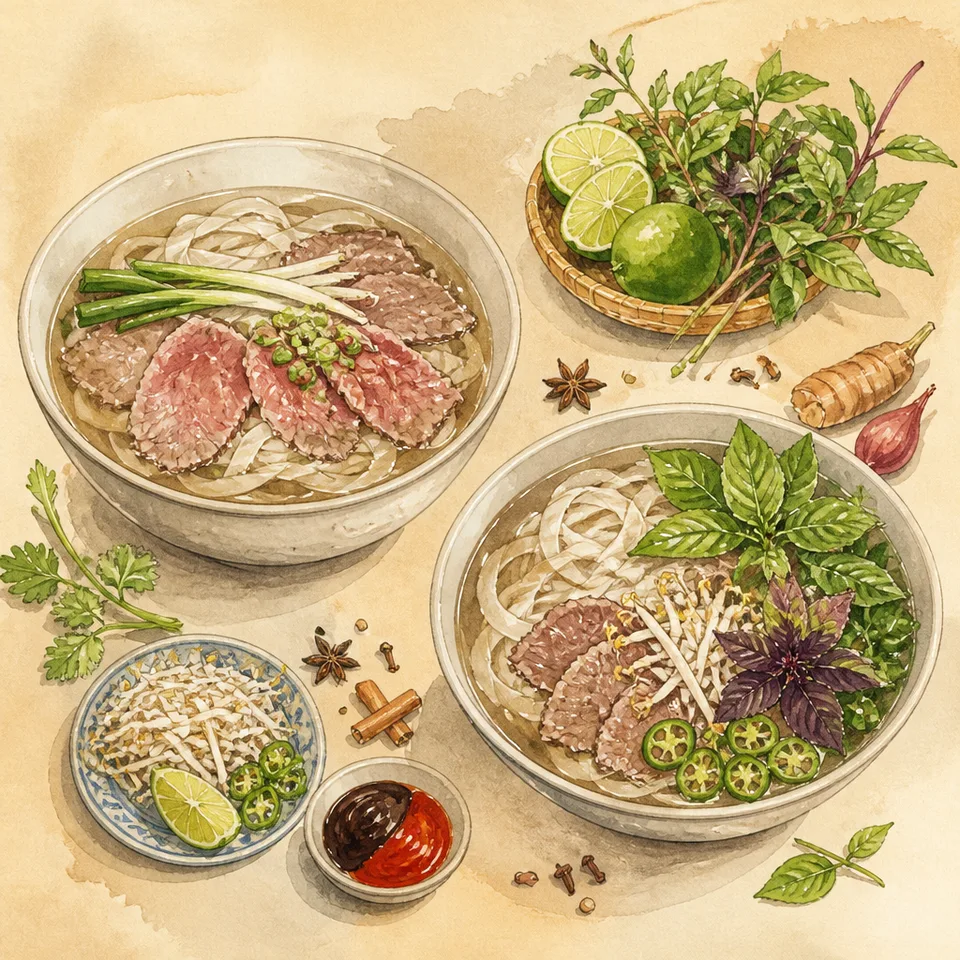
AI-generated editorial illustration, not a photograph of a restaurant or its food. The bowls are illustrative, not definitive regional recipes.
On this page
Northern pho is often described as a clearer, more restrained bowl, while southern pho is commonly associated with a fuller range of herbs, sprouts and condiments. These are broad tendencies, not fixed recipes. For diners choosing pho in Ottawa, regional language is most useful as a starting point for questions—not a promise about every bowl.
The distinction is documented by Vietnam Tourism’s dish guide and explored through cooks’ perspectives in ABC’s reporting on regional pho. Neither supports declaring one version the only authentic one. Family recipes, migration and restaurant preferences make the story more interesting than a strict north-versus-south contest.
This guide concentrates on style: what you may notice, how to describe your preferences and what to ask before ordering. It is not a tasting ranking of Ottawa restaurants. For a broader introduction, start with what pho is; for local choices, use our Ottawa pho soup guide.
What is the difference between northern and southern pho?
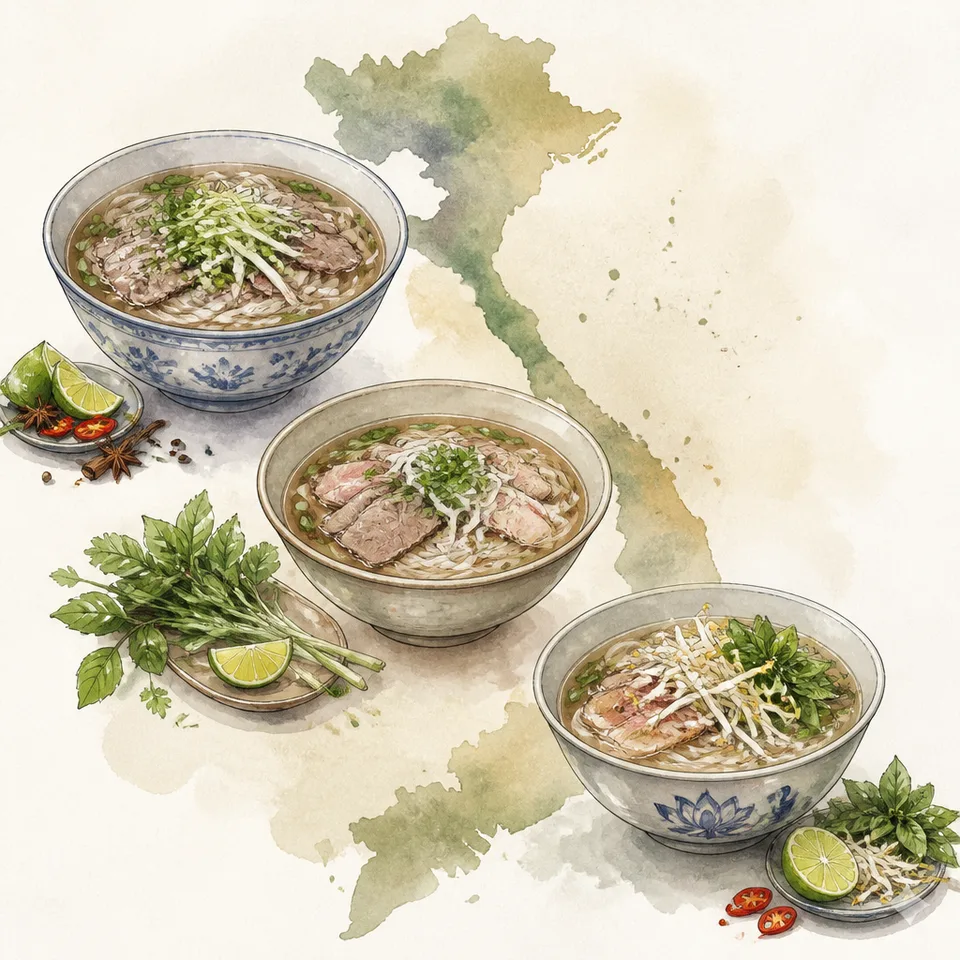
The clearest comparison is between the bowl’s starting point and the range of additions around it. Vietnam Tourism describes Hanoi pho as having a clear broth and southern versions as more varied in their accompaniments. National Geographic’s account of pho’s development also describes the dish changing as it travelled. Use that context to recognize possibilities, not to inspect a meal for compliance.
| What to notice | Northern-style tendency | Southern-style tendency |
|---|---|---|
| Broth impression | Often clearer and more restrained | Often described as sweeter or bolder |
| Accompaniments | A smaller set of additions is often emphasized | A larger herb-and-sprout selection is often emphasized |
| Useful question | “How would you describe this broth?” | “Which herbs and condiments come with it?” |
| What the label cannot tell you | The exact stock, salt level or ingredients | The exact stock, sweetness or ingredients |
A subtle broth is not automatically weak, and a fuller garnish plate is not automatically better. A cook may aim for a clear beef aroma with few distractions; another may build a bowl meant to change as herbs, lime and sauce are added. Both approaches can be intentional. The practical question is which experience you want today.
Do not turn a tendency into a rule
A bowl served outside Vietnam may combine influences or follow a particular family’s recipe. Even within Vietnam, descriptions differ. Avoid conclusions such as “northern pho never has sprouts” or “southern pho is always sweet.” If a menu does not state a regional style, ask about the flavour and accompaniments rather than assigning one from a photograph.
Why does pho have more than one regional identity?
Pho’s early history is not completely settled. National Geographic presents Nam Định as a widely accepted origin account, while Vietnamese tourism material acknowledges differing accounts of its beginnings. It is safer to describe pho as developing in northern Vietnam than to name one uncontested inventor, restaurant or moment. Our history of pho guide explores that uncertainty in more detail.
What matters for the present comparison is that the dish did not remain unchanged. Reporting on pho’s history connects its spread south with migration, including movement after the 1954 partition. Ingredients, local tastes and the preferences of cooks and diners helped shape new versions. The resulting variety is part of the dish’s history, not evidence that one region misunderstood it.
That perspective is useful in Ottawa. A menu may describe beef pho, chicken pho or a house-special combination without making a north-or-south claim. The restaurant may be presenting its own established version. You can appreciate that bowl without needing to classify it perfectly, just as you can ask how a recipe is made without asking staff to defend its authenticity.
When discussing regional traditions, be specific about the source of a statement. “Often described as” is more accurate than “must be.” It leaves room for real variation and gives you a better vocabulary for your next meal: clear, aromatic, rich, gently sweet, herb-forward, or deliberately spicy.
Which ingredients shape the flavour of a bowl?
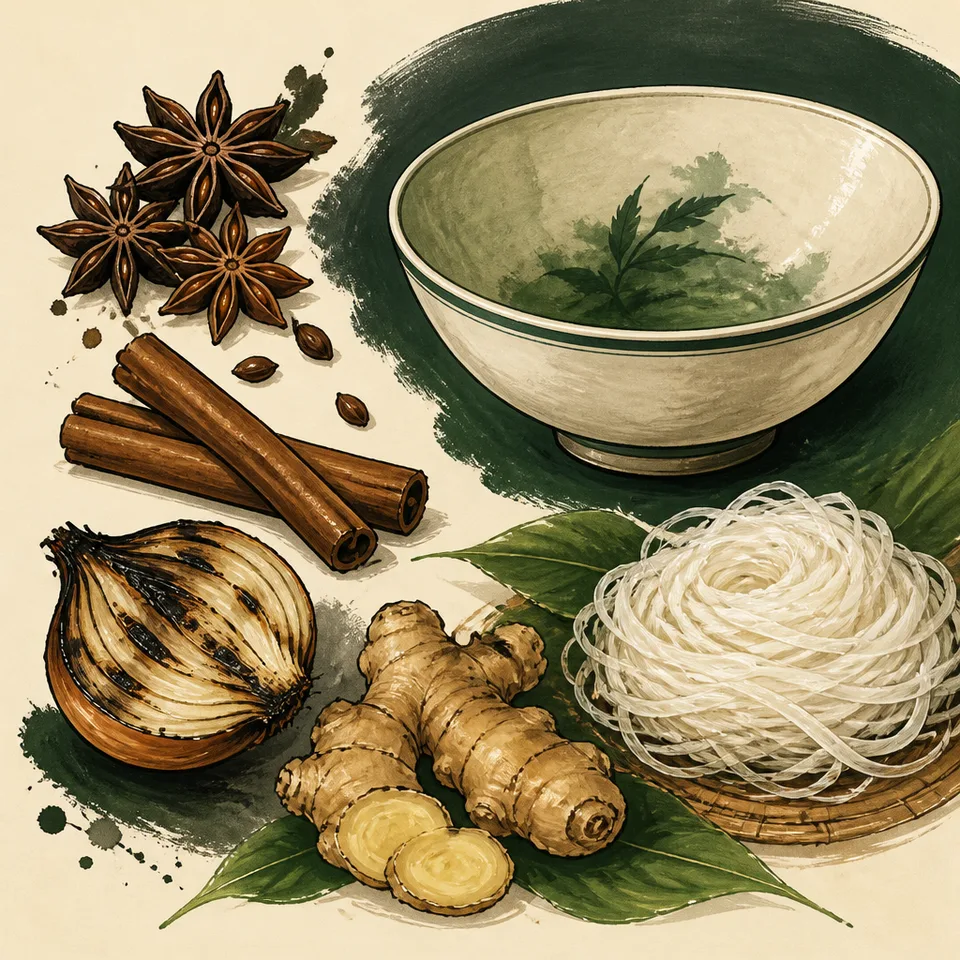
Pho usually brings together broth, flat rice noodles called bánh phở, and recipe-specific proteins and finishing ingredients. Vietnam Tourism identifies star anise, clove and cinnamon among familiar broth aromatics. Their presence does not establish a fixed spice formula: the quantity, balance and preparation remain the cook’s choices.
Separate broth character from the topping
A beef topping does not tell you everything about the stock, and a chicken label does not explain every aromatic or sauce. If the base matters to you, ask directly. Our pho broth guide separates beef, chicken and vegetable styles, while the spice guide explains the role of aromatics without treating every recipe as identical.
Protein is a separate texture decision. Thin slices, cooked brisket, tendon, tripe and meatballs do not feel the same. A combination bowl can offer variety, but it is not automatically the right first order. Ask what the restaurant’s combination includes and use the pho protein guide if the menu terms are unfamiliar. There is nothing wrong with choosing one familiar topping.
Consider noodles and finishing ingredients too
Noodle texture affects each mouthful, while herbs, acidity and condiments can alter the bowl after it reaches the table. Rather than adding everything immediately, try a spoonful of broth and a few noodles first. That gives you a reference point. Then make one small change at a time if you want more fragrance, acidity or heat.
How can you choose a style without overthinking the order?
Start with the experience you want rather than a regional winner. If you enjoy noticing a broth before making additions, investigate a more restrained description. If you like changing a bowl as you eat, ask which herbs and condiments are offered. Those preferences can guide a useful conversation even when the menu does not use regional labels.
The decision framework below is an ordering aid, not a claim that every northern or southern bowl follows the same formula. It translates a preference into a question the kitchen can answer. That is more dependable than assuming a photograph or restaurant name reveals the recipe.
For a first visit, you do not need to solve every variable at once. Choose the available broth you want, pick a protein whose texture appeals to you, and check the serving size. Keep optional chilli separate if you are unsure. A small number of deliberate choices can make it easier to notice what you would order again.
Food traditions also do not require you to ignore your own comfort. Ask for the utensils you need, explain a preference for fully cooked meat before ordering, and do not feel obliged to use every condiment. If the group includes someone who does not want soup, our Vietnamese menu guide offers other meal formats without turning the meal into a compromise for everyone.
Visual ordering guide
From flavour preference to a useful question
A practical pho decision guide. Follow your preference, then confirm the actual recipe.
01 · Broth
Want to notice the base?
Ask how the broth is described and taste it before adding condiments.
02 · Contrast
Enjoy herbs and acidity?
Ask which accompaniments come with the bowl; add a little at a time.
03 · Texture
Prefer familiar cuts?
Choose a named protein rather than assuming a combination suits you.
04 · Preparation
Have a dietary requirement?
Check stock, sauces, toppings and shared preparation—not just the regional label.
Regional tendencies help describe pho. They do not certify a recipe, a dietary claim or a restaurant’s quality.
How does this help when choosing pho in Ottawa?
Local planning starts with the meal you can realistically fit into your day. On a lunch break, compare the restaurant’s opening time with your break and ask about current service or pickup timing. Do not assume a bowl will arrive within a fixed number of minutes. If time is tight, choose a straightforward order and confirm the arrangements before leaving.
For a casual dinner, a regional comparison can be a conversation rather than a test: what kind of broth do you enjoy, which textures do you want, and how much heat would you like? Use our Vietnamese restaurant planning guide to think about location and the group’s preferences. A useful restaurant choice is one that suits this meal, not a universal citywide winner.
In downtown Ottawa, Pho By Night in the ByWard Market is at 309 Dalhousie Street and has served Ottawa since 2000. Its official site is a source for its own location and service information—not evidence of a particular northern or southern classification. We do not assign the restaurant a regional style that it has not confirmed.
Winter is another practical context. If you want to sit down with hot broth after being outdoors, leave enough time to enjoy the meal instead of scheduling your next stop immediately. For takeaway, ask how the components are packed and follow the restaurant’s handling instructions. This is dining advice, not a claim that pho treats a cold or changes your health.
Before a time-sensitive visit, check the current menu for pho in Ottawa and confirm anything essential directly. Listed opening hours are not a guarantee of last seating, kitchen cutoff, delivery coverage or a particular dish’s availability. The same checks are useful wherever you choose to eat.
What should you confirm before the bowl is prepared?
A style comparison cannot answer a dietary question. Rice noodles alone do not establish that the complete dish is gluten-free; tofu alone does not establish a vegan stock; beef alone does not establish halal sourcing. Explain the specific ingredient or preparation requirement before ordering so staff can address the whole meal.
Ask about broth, sauces, prepared toppings and shared equipment when those details matter. If the answer is uncertain on something essential to you, choose another dish or venue rather than relying on a regional label. Our guides to gluten and pho and vegan pho in Ottawa provide more focused questions.
At the table, flavour adjustments remain optional. You can enjoy an unaltered broth, a little lime, fresh herbs, or a careful amount of chilli. Ask about an unfamiliar condiment rather than guessing from its colour. The goal is not to prove that you know the one correct way to eat pho; it is to understand the meal and enjoy the version in front of you.
Frequently asked questions
- Is northern or southern pho more authentic?
- Neither is the single authentic version. Reporting and official tourism material describe pho changing across regions and through migration. Northern and southern traditions offer useful context, but individual cooks and family recipes do not all follow one formula.
- Is southern pho always sweeter?
- Southern pho is often described as sweeter or bolder, but that is a tendency rather than a guarantee. Ask how a restaurant describes its broth instead of assuming a fixed sweetness from the regional label.
- Does northern pho come without herbs or sprouts?
- Northern styles are often associated with fewer accompaniments, but avoid treating that as an absolute rule. Restaurants and recipes vary. Ask which garnishes are offered with the specific bowl you are considering.
- Can I tell a pho style from its toppings?
- Not reliably. A garnish plate can suggest an approach, but it cannot establish the stock, recipe history or regional identity. A direct question about the broth and accompaniments is more useful than classifying a bowl from a photograph.
- What is a good first pho order in Ottawa?
- Choose an available broth and a familiar protein, ask what the portion includes, and keep optional chilli separate if needed. Confirm any dietary requirements before ordering. There is no single first bowl that suits every person or restaurant.
- Do Ottawa restaurants have to label their pho by region?
- No. A menu may use protein names, house-special labels or a restaurant’s own descriptions instead. Regional vocabulary can help you ask about flavour, but it should not replace the restaurant’s explanation of its own dish.
Sources and verification
Culinary sources describe traditions and examples, not a universal restaurant recipe. Restaurant-specific details were checked against official information on November 9, 2026; menus and services can change. All food images on this page are AI-generated illustrations.