OttawaPho · Understand your order
How to Read a Vietnamese Menu: A Practical Guide for Ottawa Diners
Recognize the meal format, understand what the name does—and does not—tell you, then build a lunch or dinner that fits your appetite and plans.
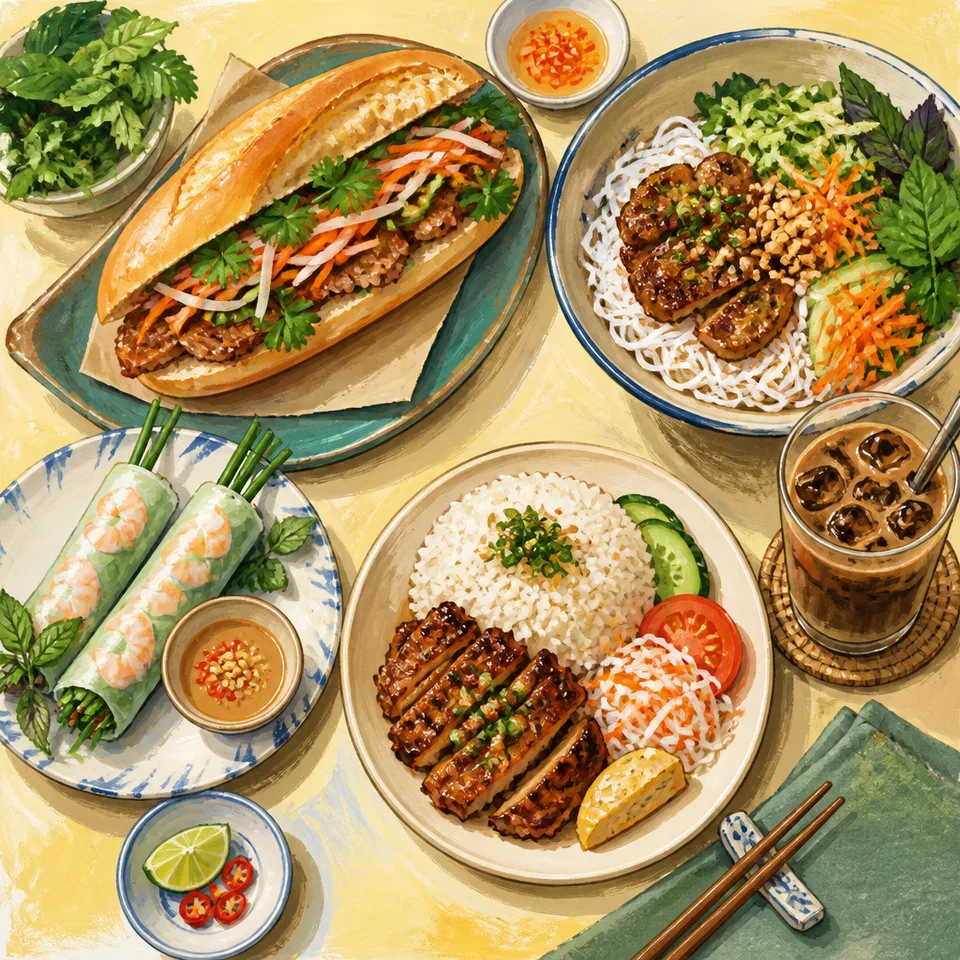
AI-generated editorial illustration, not a photograph of a restaurant’s dishes, portions or premises.
On this page
A Vietnamese menu becomes easier to read when you identify the meal format first: broth and noodles, vermicelli, a rice plate, a sandwich, or rolls. Then check the filling, sauces and preparation. A dish name gives useful clues, but it does not reveal every ingredient or guarantee one standardized recipe.
For Ottawa residents and visitors, that approach works for a quick lunch, a casual downtown dinner or a first meal beyond pho. It also avoids choosing only by an unfamiliar name or a photograph. This is a menu-reading reference, not a ranked restaurant list or a report of personal visits.
The descriptions below draw on Vietnam Tourism’s food guide, a specialist guide to Vietnamese noodles, and the cited sources at the end. Use them to understand a category, then let the restaurant explain the particular dish it serves.
What kind of meal are you actually looking for?
Before comparing dishes, decide whether you want to eat soup with a spoon, assemble a varied bite from noodles and herbs, enjoy a rice-based plate, or choose a sandwich. None is a universal “best” choice, and appearance does not establish a calorie count or a suitable portion for you.
A broth-based meal can suit someone looking for a warm, sit-down break during an Ottawa winter. A sandwich may suit someone who prefers bread and a defined filling. A vermicelli dish may appeal when you want several textures together. These are preference-based examples, not claims about how quickly a kitchen serves them or which dishes every restaurant offers.
Think about the whole order too. A starter and a full main can be more food than you want at lunch, while shared rolls may make sense for a table of people choosing different mains. Ask how many pieces or what accompaniments a serving includes instead of assuming that “small” and “large” mean the same thing across restaurants.
Our overview of Vietnamese food in Ottawa is a broad starting point. The visual guide below takes the next step: it turns your preferred meal format into a useful menu question.
Visual ordering guide
Choose the format, then check the details
A Vietnamese meal-format guide—not a promise that every restaurant offers every option.
Broth
Phở and other soups
Ask about stock, noodles, protein and heat already in the broth.
Noodles
Bún dishes
Ask whether it is soup, a bowl with dressing, or a dish with separate components.
Rice
Cơm and rice plates
Check the rice, protein, marinade, sauce and included sides.
Bread
Bánh mì
Check all fillings and spreads, not just the protein in the name.
Rolls
Fresh or fried
Confirm wrapper, filling, preparation and the accompanying dipping sauce.
Names help identify a dish family. The restaurant’s current recipe and preparation answer the remaining questions.
How do fresh rolls and fried spring rolls differ?
English menu terms can be confusing because “spring rolls” may be used for more than one format. The most useful first question is whether the rolls are fresh or fried. Then confirm the filling and the sauce. The preparation affects the texture, but it does not by itself establish a dietary label or a nutrition profile.
Fresh rice-paper rolls
Vietnam Tourism describes gỏi cuốn with rice paper, greens, herbs and fillings such as pork and shrimp. That is a common example, not the only version: the U.S. National Heart, Lung, and Blood Institute’s recipe demonstrates a vegetable-filled version. Together, the sources show why the name alone cannot identify the whole filling.
Ask whether a roll contains the protein you want, whether it includes noodles, and what comes in the dipping sauce. A sauce may contain ingredients not apparent in the roll itself. If you are sharing, clarify the number of rolls and whether the kitchen can accommodate different requirements without assuming separate preparation.
Fried rolls
For a fried roll, ask about the wrapper and filling rather than using crispness as an ingredient guide. Menus and translations vary, so the English label is not enough for an allergy or dietary decision. A shared starter can be a useful way to try a different texture, but it should not become an automatic addition before you know what each main includes.
How should you compare vermicelli bowls and rice plates?
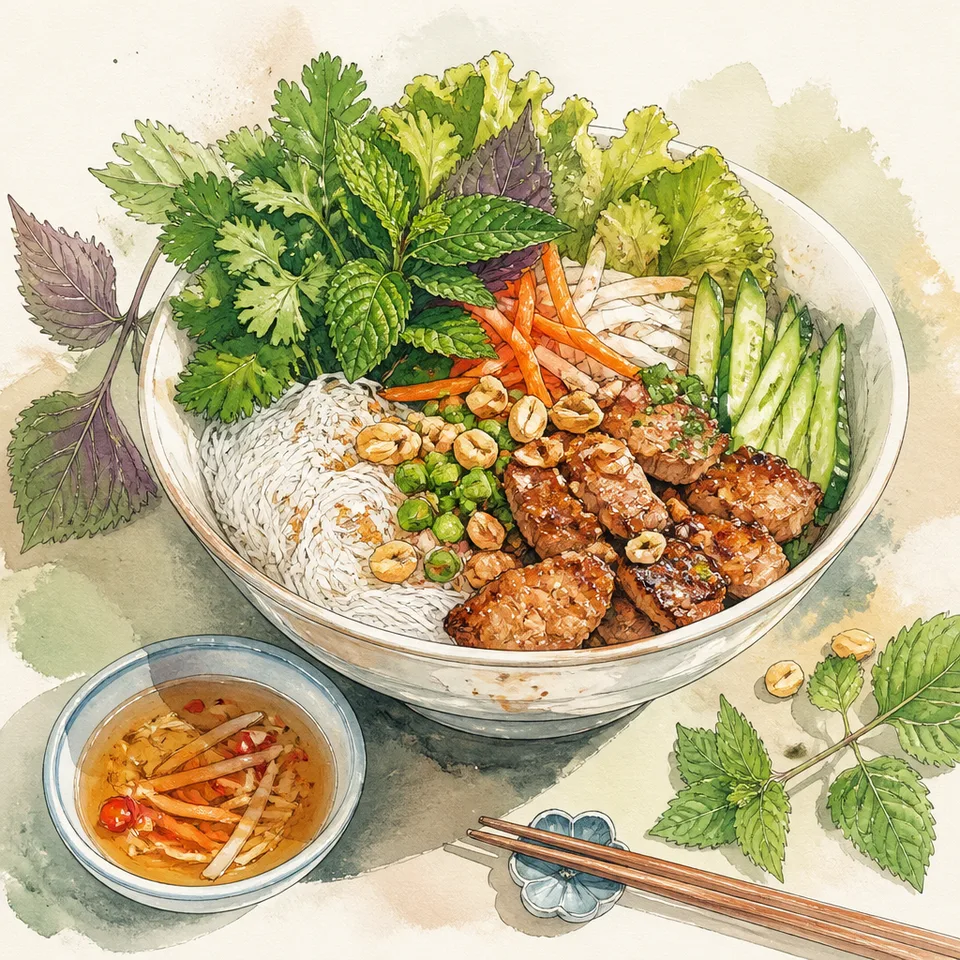
Compare the complete composition, not just whether the base is noodles or rice. Look at the protein, herbs, vegetables, sauce and any rolls or egg included in the order. Two dishes with the same named protein can differ because of their marinades, dressing and sides.
For vermicelli, first establish the serving format. Is there broth? Does the sauce arrive separately? Are the noodles, herbs and grilled ingredients meant to be combined at the table? The source descriptions of bún support several arrangements, so there is no reason to assume every bowl arrives or eats the same way.
For rice plates, ask which rice and accompaniments are used. Do not assume that every plate is cơm tấm or comes with the same topping combination. If you want a familiar main with a different base, a rice plate can be worth investigating, but its suitability depends on the actual recipe and what you enjoy.
A practical ordering sentence is: “I would like this protein, with that base; what sauce and sides are included?” It is specific enough to reveal details but does not demand that the kitchen redesign the dish. If a substitution is important, confirm whether it is possible before treating it as part of the plan.
What should you know about bánh mì and Vietnamese coffee?
A bánh mì is not one fixed filling recipe. Vietnam Tourism describes a French-influenced baguette sandwich with contrasting fillings and accompaniments. Its examples include pâté, pickled vegetables, herbs and pork, but menus vary. Check the entire sandwich rather than assuming the protein in its name is the only substantial ingredient.
Spreads, pickles and chilli can be central to the balance. If you want an ingredient left out, ask whether that is possible and whether another component contains the same ingredient. Bread is also a separate dietary consideration. Our bánh mì guide for Ottawa focuses on filling and preparation questions without promising that every local menu offers the same sandwich.
Read the coffee description as carefully as the food
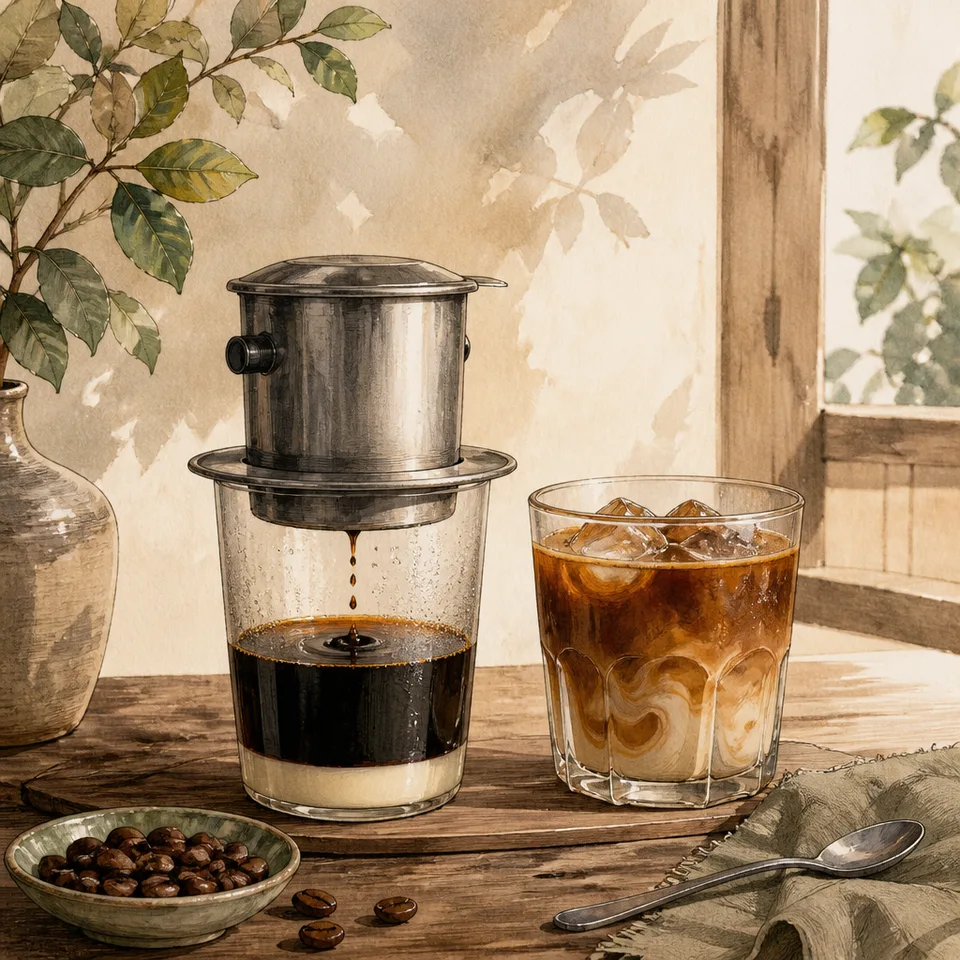
Vietnamese coffee may be brewed through a small metal filter called a phin. Vietnam Tourism’s coffee guide describes filtered coffee, ice and condensed milk among the country’s coffee preparations. These are familiar styles, not proof that every café or restaurant serves all of them.
If the menu offers an iced milk coffee, ask what milk or sweetener is used and whether the sweetness can be adjusted. A phin preparation may involve waiting while the coffee filters, so do not build a time-sensitive lunch around an assumed instant service. For more on style and dairy questions, read our Vietnamese coffee guide.
How can you plan a lunch or casual dinner in Ottawa?
For lunch, start with the time you actually have. Check opening hours, the current menu and the available service format. If you need pickup at a certain time, confirm it directly; a sandwich, rice plate or soup is not guaranteed to be faster merely because it looks simpler. Choose a manageable order rather than adding several dishes out of uncertainty.
For a casual dinner, let each diner identify the meal format they want, then decide whether a shared starter adds something useful. This is particularly helpful when one person wants pho and another wants rice or vermicelli. Our guide to a Vietnamese dinner with friends covers the group-planning side, while the northern and southern pho guide helps the soup enthusiast describe a preferred style.
If you are searching for a Vietnamese restaurant in downtown Ottawa, use a real address rather than assuming every listing described as central is convenient for your route. Ottawa Tourism describes the ByWard Market and Rideau Street area as a neighbourhood with dining, shopping and entertainment. That context can help you combine a meal with an existing visit; it does not establish a kitchen’s service speed or table availability.
A verified local example of Vietnamese dining in downtown Ottawa is Pho By Night at 309 Dalhousie Street, serving Ottawa since 2000. Its official regular hours are Sunday–Thursday, 11:30 a.m.–9 p.m., and Friday–Saturday, 11:30 a.m.–10 p.m. Plan it as lunch or a regular dinner, not an overnight restaurant. Confirm holiday hours, last orders and service arrangements directly before a time-sensitive visit.
In winter, an indoor meal can be the main destination rather than a rushed stop between outdoor activities. Leave room in the plan to get settled and eat comfortably. No weather-specific promotion, guaranteed table or personal restaurant experience is implied by that suggestion.
Which questions matter for dietary needs and available services?
State your requirement in specific terms. The main protein does not reveal the stock, marinade, dressing, spreads or shared preparation. Ask about the complete dish, then discuss equipment or cross-contact if that matters to you. If staff cannot confirm an essential point, do not use a general cuisine label as a substitute for an answer.
For example, Pho By Night’s information on halal-friendly Vietnamese options says it offers halal-friendly dishes and also serves pork. It is not a fully halal-certified restaurant. Ask about the exact dish, sourcing, broth, sauces and shared preparation rather than treating the restaurant-wide label as certification of every item.
The same specificity applies to ordering services. Check whether dine-in, pickup or delivery is available for your intended time and address, and use the restaurant’s current official arrangements. A guide cannot guarantee a delivery zone, kitchen cutoff or substitution. Our Ottawa Vietnamese restaurant guide can help you compare the practical questions without claiming one venue suits everyone.
With those checks complete, the menu becomes less intimidating: identify the format, understand the main components, and choose the dish that fits the meal you want. You do not need to order the most unfamiliar item to explore Vietnamese cuisine thoughtfully.
Frequently asked questions
- What should I order on my first visit to a Vietnamese restaurant?
- Start with a meal format you enjoy: soup, vermicelli, rice or a sandwich. Read the full description, ask about unfamiliar ingredients and choose a comfortable portion. A shared starter is optional, not a requirement for a complete first meal.
- Does bún always mean a cold noodle bowl?
- No. Bún identifies rice vermicelli used in several dishes, including soups and preparations with separate toppings or sauce. Ask how the specific dish is served rather than treating the noodle name as a complete recipe.
- Are fresh spring rolls always vegetarian?
- No. Fresh rice-paper rolls can contain ingredients such as pork or shrimp, while other versions use vegetables or tofu. Confirm the complete filling, dipping sauce and preparation before relying on a vegetarian or vegan assumption.
- What is the difference between pho and a vermicelli dish?
- Pho generally combines flat rice noodles with broth. Vermicelli refers to a different noodle format used in various dishes, which may or may not contain broth. Compare the actual stock, noodles, toppings and serving arrangement.
- Is Vietnamese coffee always served with condensed milk?
- No. Condensed milk is used in familiar Vietnamese coffee preparations, but styles vary. Read the drink description and ask whether it is black, sweetened, hot or iced, and which milk or other ingredients are included.
- Is Pho By Night fully halal-certified?
- No. Pho By Night is halal-friendly, serves pork and is not fully halal-certified. Ask the restaurant about the sourcing, ingredients and preparation of the particular dish and whether its arrangements meet your own requirements.
Sources and verification
Culinary sources describe traditions and examples, not a universal restaurant recipe. Restaurant-specific details were checked against official information on November 9, 2026; menus and services can change. All food images on this page are AI-generated illustrations.