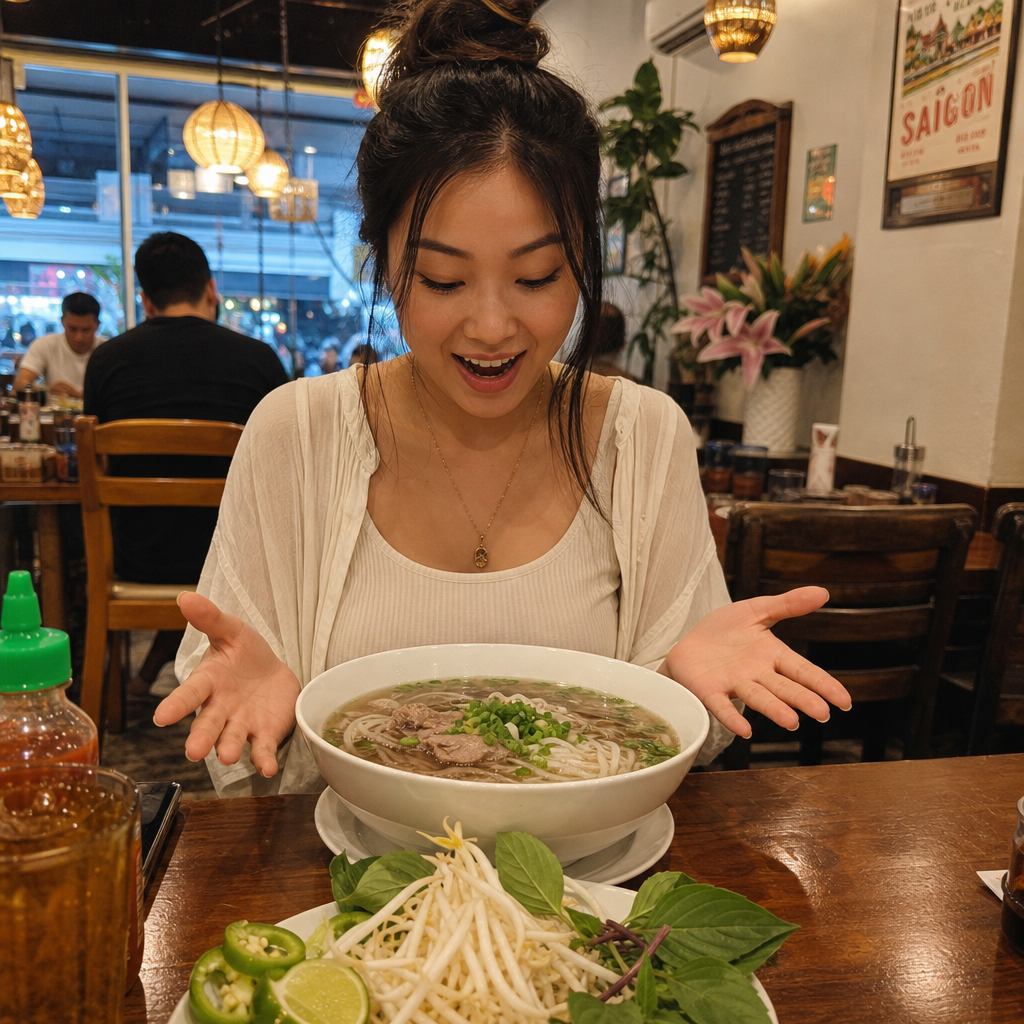
Walking into a Vietnamese restaurant for the first time can feel overwhelming. The menu is full of Vietnamese terms, the garnish plate arrives before you've figured out what anything is, and you're not sure whether to use chopsticks or a spoon. This guide removes all of that uncertainty. By the end, you'll know exactly what to order, how to customise your bowl, and how to eat pho the way locals do.
For a local starting point, check Pho By Night's official menu. It has served the ByWard Market at 309 Dalhousie Street since 2000. Ask which bowl and portion fit your preferences. Selected options are halal-friendly, but the restaurant also serves pork and is not fully halal-certified.
What Is Pho, Exactly?
Quick Definition
Pho (pronounced "fuh") is a Vietnamese noodle soup made from long-simmered bone broth, flat rice noodles, a choice of protein — usually beef or chicken — and a customisable garnish plate. The broth simmers for up to 24 hours and is the heart of the dish.
Pho originated in northern Vietnam in the early 1900s and spread globally with the Vietnamese diaspora. What you find in Ottawa today is largely the southern Vietnamese style — slightly richer broth, thinner noodles, and a generous garnish plate that you customise yourself.
Understanding the four components helps you order confidently: the broth (the foundation — beef or chicken), the noodles (always flat rice noodles called bánh phở), the protein (your choice of cuts), and the garnish plate (what you add yourself at the table). See our complete what is pho guide for the full history and breakdown.
What to Order Your First Time
For a first visit, keep it simple. Two options stand out as the best introductions:
Pho Tái (Rare Sirloin)
Paper-thin beef cooked in the bowl by the hot broth. Clean, classic, and exactly what pho is meant to taste like.
Pho Gà (Chicken)
Lighter golden broth with poached chicken breast. If you're unsure about beef cuts, start here.
If you want to try everything in one bowl, order the Pho Đặc Biệt (house special) — it includes all the beef proteins and is what most regulars order.
Choosing Your Protein
The protein choice is where first-timers often freeze. Here is every option decoded:
| Vietnamese | English | Beginner? |
|---|---|---|
| Tái | Rare Sirloin | ✓ Yes |
| Gầu | Fatty Brisket | ✓ Yes |
| Gân | Tendon | Later |
| Sách | Tripe | Later |
| Bò Viên | Beef Meatballs | ✓ Yes |
| Gà | Chicken (Pho Ga) | ✓ Yes |
Small vs Large: Which Size?
Most Ottawa pho restaurants offer two or three sizes. A regular bowl is a full, satisfying meal for most adults — it is not a small portion. Large is for big appetites or when you are very hungry.
Size guide for first-timers
- Order regular your first time — it is more than enough for most people.
- Large bowls are great once you know you love pho and want maximum broth.
- Do not order small if you haven't eaten — it exists but is genuinely compact.
What to Do With the Garnish Plate
The garnish plate arrives alongside your bowl. It is not a salad — it is a customisation tool. Here is how to use each element:
Bean sprouts
Drop a handful directly into the hot broth. They will wilt in 30–60 seconds to a satisfying crisp-tender texture.
Thai basil
Tear a few leaves and drop them in the broth. The heat releases the aromatic oils. Do not add the whole stem.
Lime wedge
Squeeze directly into the bowl. Start with half a wedge — you can always add more. Lime brightens the broth significantly.
Jalapeño slices
Add for fragrance and mild heat. Remove before they steep too long or the heat intensifies.
For the full garnish breakdown, see our complete pho toppings guide.
Sauces and Condiments Explained
The table will have small bottles of condiments. Here is what they are and how to use them correctly:
Hoisin sauce (tương đen)
Thick and sweet. Use as a dipping sauce for your meat — not in the broth. A small dish on the side is the right way.
Sriracha
Add directly to the broth for heat. Start with a small squeeze; it is potent.
Fish sauce (nước mắm)
For extra savoury depth. The broth is already seasoned — taste first before adding.
Chili oil / chili garlic paste
Optional heat boost. A small amount goes a long way.
Full breakdown in our pho sauce guide.
How to Actually Eat It
There is no rigid etiquette — but a simple sequence makes the experience much better:
Taste the broth first, plain. This tells you the kitchen's skill level and whether you need any adjustments.
Add your garnishes — sprouts, basil, lime — and stir gently.
Use chopsticks to separate the noodles from the bottom (they clump slightly).
Lift noodles and meat with chopsticks; use the spoon to drink broth between bites.
Picking up the bowl and drinking broth directly is completely normal and encouraged.
Dip meat in hoisin on a side dish — don't pour hoisin into the broth.
See our full how to eat pho guide for more detail.
Restaurant Etiquette Tips
Slurping is fine
In Vietnamese dining culture, slurping noodles is normal and signals enjoyment. Don't feel self-conscious.
Ask questions
Vietnamese restaurant staff are used to explaining the menu to newcomers. Ask what's recommended — they're happy to help.
You don't have to finish the broth
Bowls are generous. Leaving broth is not rude. Finishing is a compliment to the kitchen.
Tipping is expected
Standard restaurant tipping (15–20%) applies at Vietnamese restaurants in Ottawa.
Frequently Asked Questions
Ready for Your First Bowl in Ottawa?
Pho By Night at 309 Dalhousie Street is Ottawa's most-reviewed pho restaurant and the perfect place for a first bowl — staff are welcoming, the menu is approachable, and the 24-hour bone broth speaks for itself.